Keeping Food Hot: What 50 Years in Navy Galleys Taught Me
Most home cooks worry about cooking the food. They don't think about keeping it hot. But when you're feeding 1,000 sailors on a ship, or 300 people at a pub, keeping food at the right temperature is half the battle. Here's what I learned — including what not to do.
Steam Tables: The Navy Workhorse
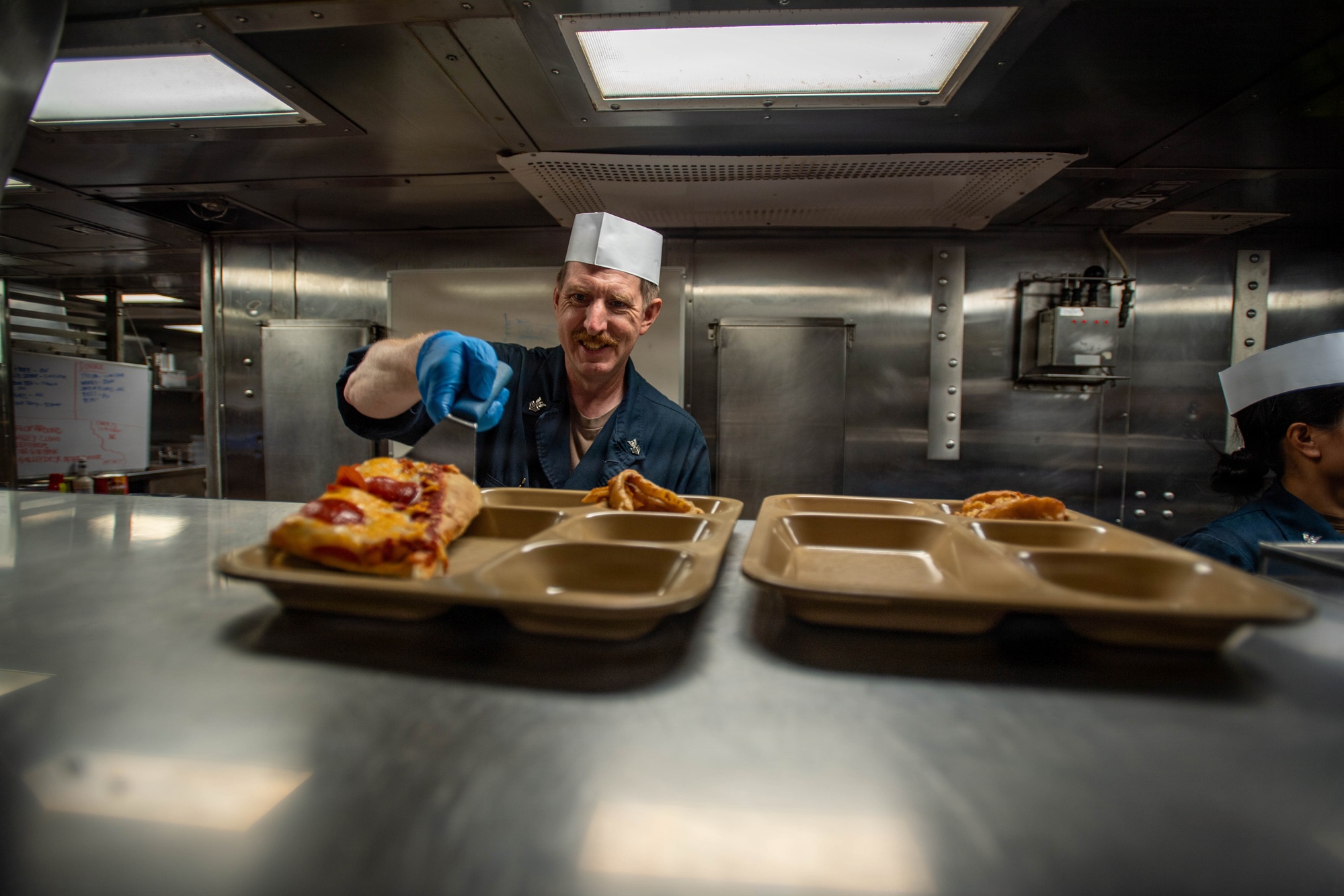
A sailor serving dinner on the mess line aboard USS Gridley (DDG 101). U.S. Navy photo.
In the Navy, we used steam tables. Big stainless steel units — you fill them with water, steam pipes heat the water, and the steam keeps the food pans hot. Simple. They worked well. Just fill with water at the start of the meal, drain when you're done.
Were they a pain? Not really. Pretty easy to use actually. The only problem was cleaning them. I burned myself more than once trying to wipe them down before they'd cooled. Steam burns are no joke — they hurt, and they sneak up on you. You think the surface looks fine, you reach in to clean it, and your hand tells you real fast that it's still 200 degrees.
Lesson: wait. Let it cool. Go do something else for 15 minutes. The steam table isn't going anywhere.
You probably don't have a steam table in your kitchen. That's fine. But if you're ever catering or feeding a crowd, the concept matters: moist heat keeps food hot without drying it out. Dry heat dries it out. Remember that.
The Heat Lamp War: A Story About a 50-Pound Roast
One time, we were serving a steamship round — that's a massive, bone-in whole round of beef. They weigh 35 to 65 pounds. It's a serious piece of meat, and you carve it to order.
We had a heat lamp set up to keep the roast warm while we cut it. The lamp kept turning off. We'd fiddle with it, get it back on, and it would shut off again. So we got a new one. Set it up. Same thing — it wouldn't stay on.
So now we're cutting this giant roast with no heat lamp, and the meat is getting cold before people get served. Cold roast beef. Not great.
Eventually we got the lamp replaced with one that worked. But then we had the opposite problem — it ran too hot and the meat started drying out before it got to people. The outside was getting crispy. Not in a good way.
That's when I learned: don't cut ahead. Cut to order. When someone comes up and asks for roast beef, that's when you cut it. Not before. Not a plate full sitting under a lamp getting dry. You cut it, you plate it, you serve it.
Heat lamps are a double-edged sword. Too cold and the food's cold. Too hot and it's dried out. If you use one at home, keep some distance between the lamp and the food, and don't leave stuff under it longer than you have to.
Chafing Dishes: The Party Solution
On shore, and at parties and events, we used chafing dishes — both kinds. The fancy stainless steel ones with the roll-top lids, and the disposable foil ones with the wire racks. They both work the same way: you put a pan of water under the food pan, light a Sterno fuel can underneath, and the steam from the water keeps the food hot.
Same concept as the steam table, just smaller. Moist heat. Works well.
Here's what I can tell you from experience:
- The fancy stainless ones last forever. If you cater or do events regularly, invest in a good stainless steel chafing set. They look professional and they hold temperature better.
- The disposable ones are fine for one-time use. Backyard party, family reunion, one-time event? Get the disposable kit. Don't overthink it.
- Always fill the water pan. No water = no steam = dry food. Don't forget.
- Don't skimp on the fuel. Get good Sterno cans that burn 2-6 hours. The cheap ones don't last.
- Keep the lid closed when people aren't serving. Every time you open it, you lose heat.
Crock Pots: The Home Cook's Best Friend
I use a Ninja slow cooker at home now. I like the Ninja brand. It's what I use for almost everything — stews, casseroles, that kind of dish.
Here's what a lot of people don't know: a good crock pot isn't just for slow cooking. The Ninja ones let you sauté and fry meats and vegetables right in the same pot. So you can brown your meat, add your vegetables, pour in your liquid, and switch it to slow cook — all in one pot. Less cleanup. Less fuss.
For a guy who's sick of cooking, that matters. Fewer pans to wash. Fewer steps. Throw it all in, walk away, come back to a hot meal.
If you don't have one, get one. Not because it's fancy. Because it does the work while you're doing something else. That's the whole point.
What I've Learned About Keeping Food Hot
- Match the heat to the food. Moist heat — steam tables, chafing dishes, crock pots — keeps stews, casseroles, and saucy dishes hot without drying them out. Dry heat — heat lamps — is what you want for crispy things, fried food, roasted meat. Using the wrong one ruins the food. Moist heat on fried chicken makes it soggy. Dry heat on a stew turns it into paste.
- Don't leave the lid on everything. Lids trap moisture, which is great for soups and stews but terrible for anything crispy. If you made something that's supposed to have a crust or a crunch, leave the lid off or it'll go soft.
- Don't prep too far ahead. Cut to order. Plate to order. The longer food sits under heat — any kind — the worse it gets.
- Heat lamps have their place. They're not a last resort. They're the right tool for dry foods. Just don't leave stuff under them forever — even dry heat will eventually dry out meat if it sits too long. Like that roast beef I told you about.
- Let equipment cool before cleaning. I've got the burn scars to prove this one. Wait 15 minutes. Go do something else. Then clean.
The Bottom Line
Keeping food hot isn't complicated, but you have to think about what you're keeping hot. Soups and stews? Moist heat, lid on. Fried and crispy? Dry heat, lid off. Don't use a steam table when you need a heat lamp, and don't use a heat lamp when you need a steam table.
If you're feeding a crowd, get chafing dishes for the wet stuff and a heat lamp for the dry stuff. If you're feeding your family, a good crock pot handles most of it. Either way, the food stays hot and you stay sane.
That's Cook's Reality.
Food Warming Gear Worth Looking At
Here's what I'd actually buy:
🍲 My Pick: Ninja Slow Cooker / Multi-Cooker
The one I use at home. Sauté, fry, slow cook — all in one pot. Browse Ninja slow cookers on Amazon →
🍽️ For Parties: Stainless Steel Chafing Dish Set
Roll-top lid, full size, holds temperature well. Looks professional. Lasts forever. Browse chafing dishes on Amazon →
🔥 Chafing Fuel: Sterno Cans
Get the 2-6 hour burn ones. Don't cheap out. Browse Sterno fuel on Amazon →
📦 Disposable Chafing Kit: For One-Time Events
Wire rack, foil pans, fuel — all in one box. Perfect for backyard parties. Browse disposable chafing kits on Amazon →
💡 Heat Lamp: Use With Caution
Good for short-term holding. Keep distance between lamp and food. Don't leave food under it too long. Browse food heat lamps on Amazon →
🫕 Classic Crock Pot: The Original
If you don't need the sauté/fry feature, the original Crock Pot brand works just fine. Browse Crock Pots on Amazon →